|
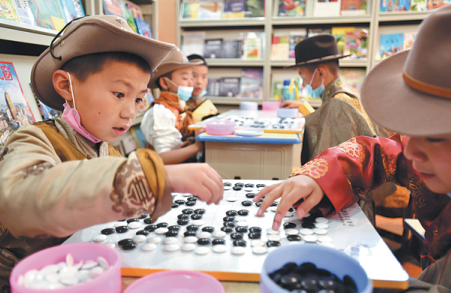
Students participate in a Tibetan chess competition in the Tibet autonomous region on June 27, last year. CHOGO/XINHUA The Ministry of Culture and Tourism released a new group of 325
national intangible cultural heritage items on Thursday in Beijing,
increasing the list established in 2006 to 1,557 items. Judges organized by the ministry selected the new items from 943
nominations from around the country falling under 11 categories, which
include folklore, traditional music, dance, opera, sports, arts, crafts,
medicine, and, a new category, diet. "One reason for adding the new category this year was that
nominations concerning traditional diet made up one-sixth of the total, a
rather high proportion," said Wang Chenyang, director of the ministry's
Intangible Cultural Heritage Department. Traditional diet used to be classified among traditional crafts in
the list. However, its judging standards vary considerably from those
for other crafts, such as pottery, textile technology or architecture,
he said. This year, cooking skills such as those of Sichuan, Anhui and
Chaozhou cuisines entered the traditional diet list, in addition to the
cooking skills of local snacks like Shaxian county snacks, Guilin rice
noodles and Lanzhou beef noodles. "Over thousands of years, Chinese people from different areas have
created diverse diets in accordance with their different living
environments and local products. This category is not only about cooking
skills, but a whole set of knowledge and practices regarding selection
of ingredients, processing, cooking and consuming," Wang said. These are important parts of Chinese social life and convey Chinese
people's ideas about health and respect for food and nature, he said. As the selection gave great attention to intangible cultural heritage
items from various ethnic groups, Mongolian leather carvings, Tibetan
chess, Uygur hockey, Yi architecture techniques, Tatar pastry, among
others, entered the list. Items such as the cheongsam and the Tin Hau (Goddess of the Sea
Matsu) Festival from the Hong Kong Special Administrative Region, and
the Cantonese plays and cuisines of locally born Portuguese in the Macao
SAR were also added to the list. Apart from endangered items, another focus of this year was
nominations that would help to alleviate poverty, such as the Mongolian
embroidery in Horqin Right Wing Middle Banner in Hinggan League, Inner
Mongolia autonomous region. The local government has organized embroidery training classes for
over 10,000 people. About 26,000 local women currently work in the
industry. More than 2,800 impoverished households have benefited from
it, and people's annual income growth has increased over 2,000 yuan
($315) per capita. "In recent years, with creative development, many intangible cultural
heritage items have integrated into modern life and have contributed to
the country's economic development and the improvement of people's
cultural life," Wang said.
| 


 Related News