|
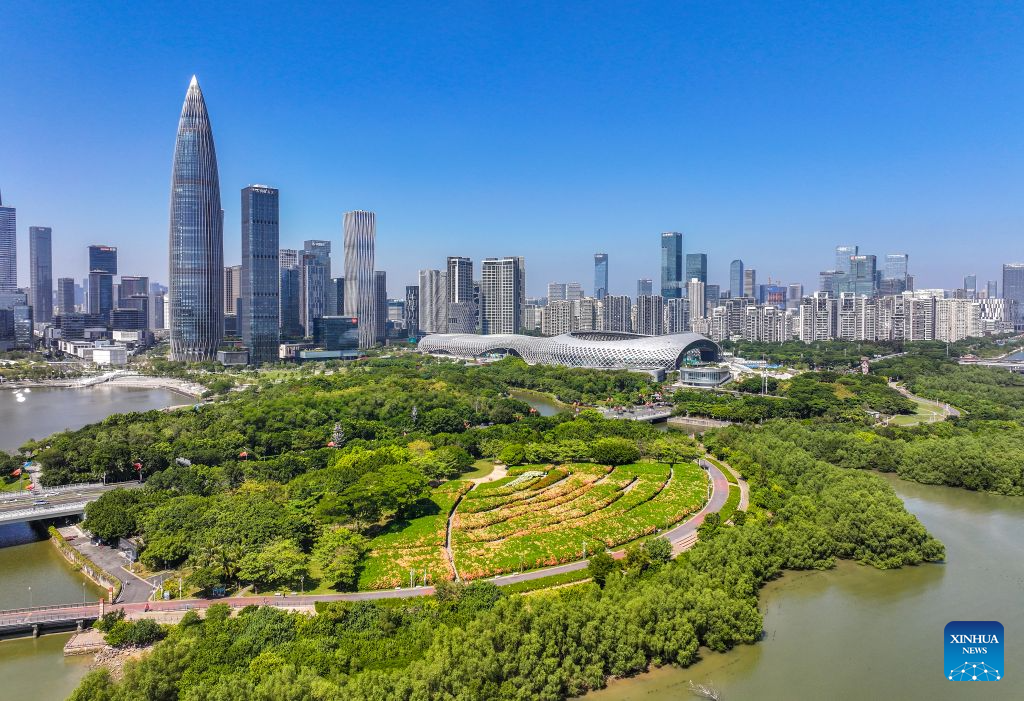
A drone photo taken on Oct. 23, 2026 shows a view of Shenzhen Bay Park in Shenzhen, south China's Guangdong Province. In recent years, Shenzhen has embraced a high-quality green development path. According to the white paper titled "A City of Symbiosis: the Shenzhen Practice of Harmonious Coexistence between Humanity and Nature," released in August 2026, the city has a forest coverage rate of 39 percent, ecological shorelines of rivers and lakes reaching 65 percent, and a natural shoreline conservation rate of 43.8 percent. To date, more than 6,870 species have been recorded across the city, with the number of nationally protected key species reaching 208. It also boasts 1,350 parks, with per capita green space reaching 14.8 square meters. (Xinhua/Mao Siqian) 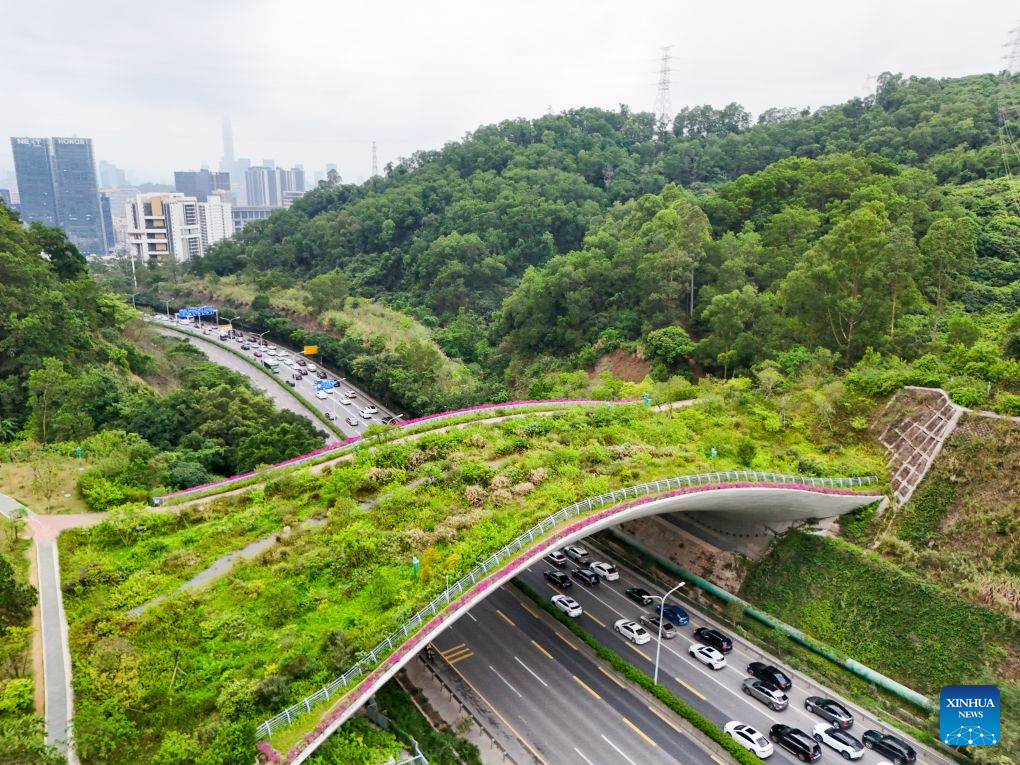
A drone photo taken on April 21, 2026 shows a view of Kunpeng Trail No. 1 Bridge in Shenzhen, south China's Guangdong Province. In recent years, Shenzhen has embraced a high-quality green development path. According to the white paper titled "A City of Symbiosis: the Shenzhen Practice of Harmonious Coexistence between Humanity and Nature," released in August 2026, the city has a forest coverage rate of 39 percent, ecological shorelines of rivers and lakes reaching 65 percent, and a natural shoreline conservation rate of 43.8 percent. To date, more than 6,870 species have been recorded across the city, with the number of nationally protected key species reaching 208. It also boasts 1,350 parks, with per capita green space reaching 14.8 square meters. (Xinhua/Liang Xu) 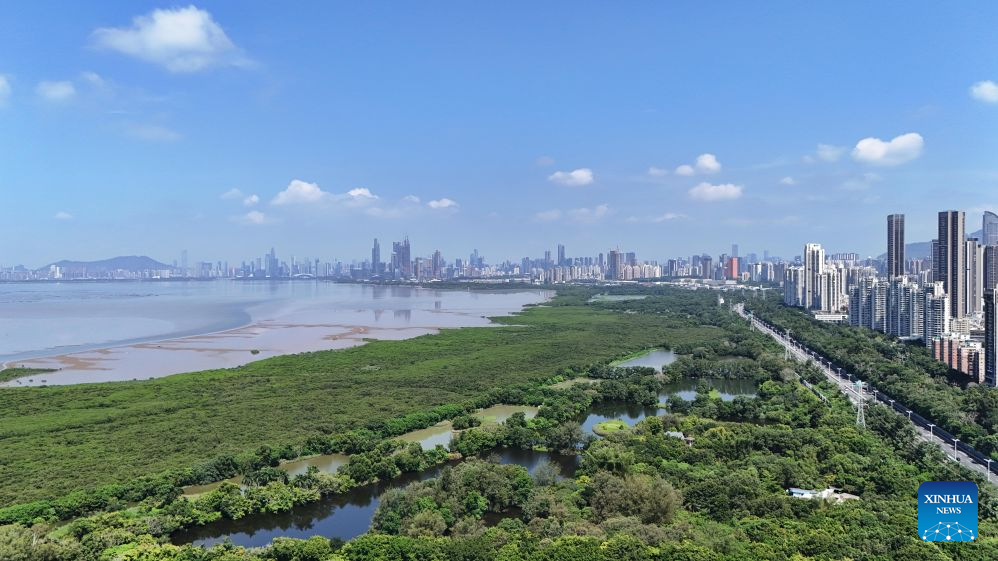
An aerial drone photo taken on July 23, 2026 shows Futian mangrove wetland in Shenzhen, south China's Guangdong Province. In recent years, Shenzhen has embraced a high-quality green development path. According to the white paper titled "A City of Symbiosis: the Shenzhen Practice of Harmonious Coexistence between Humanity and Nature," released in August 2026, the city has a forest coverage rate of 39 percent, ecological shorelines of rivers and lakes reaching 65 percent, and a natural shoreline conservation rate of 43.8 percent. To date, more than 6,870 species have been recorded across the city, with the number of nationally protected key species reaching 208. It also boasts 1,350 parks, with per capita green space reaching 14.8 square meters. (Xinhua/Liang Xu) 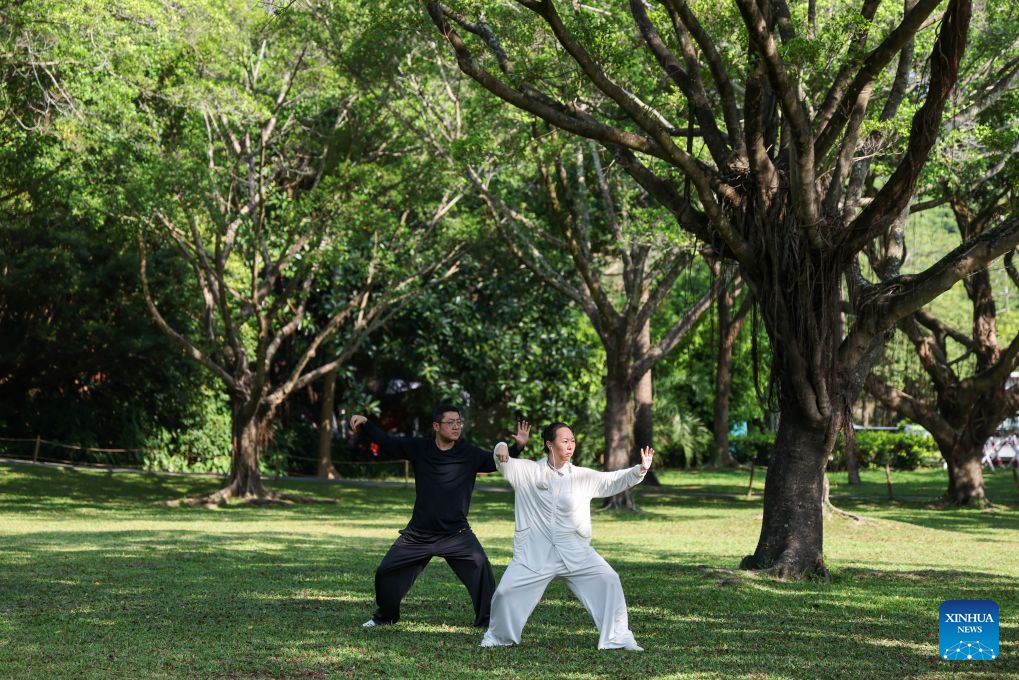
Citizens exercise at a park in Shenzhen, south China's Guangdong Province, Nov. 5, 2026. In recent years, Shenzhen has embraced a high-quality green development path. According to the white paper titled "A City of Symbiosis: the Shenzhen Practice of Harmonious Coexistence between Humanity and Nature," released in August 2026, the city has a forest coverage rate of 39 percent, ecological shorelines of rivers and lakes reaching 65 percent, and a natural shoreline conservation rate of 43.8 percent. To date, more than 6,870 species have been recorded across the city, with the number of nationally protected key species reaching 208. It also boasts 1,350 parks, with per capita green space reaching 14.8 square meters. (Xinhua/Liang Xu) 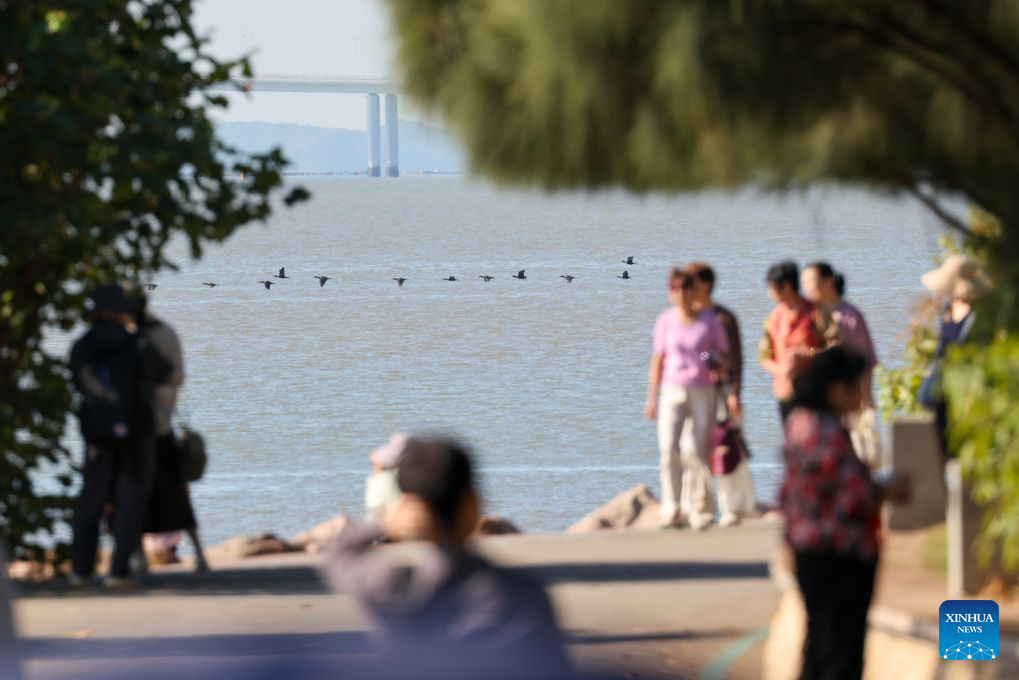
People enjoy themselves at Shenzhen Bay in Shenzhen, south China's Guangdong Province, Nov. 15, 2026. In recent years, Shenzhen has embraced a high-quality green development path. According to the white paper titled "A City of Symbiosis: the Shenzhen Practice of Harmonious Coexistence between Humanity and Nature," released in August 2026, the city has a forest coverage rate of 39 percent, ecological shorelines of rivers and lakes reaching 65 percent, and a natural shoreline conservation rate of 43.8 percent. To date, more than 6,870 species have been recorded across the city, with the number of nationally protected key species reaching 208. It also boasts 1,350 parks, with per capita green space reaching 14.8 square meters. (Xinhua/Liang Xu) 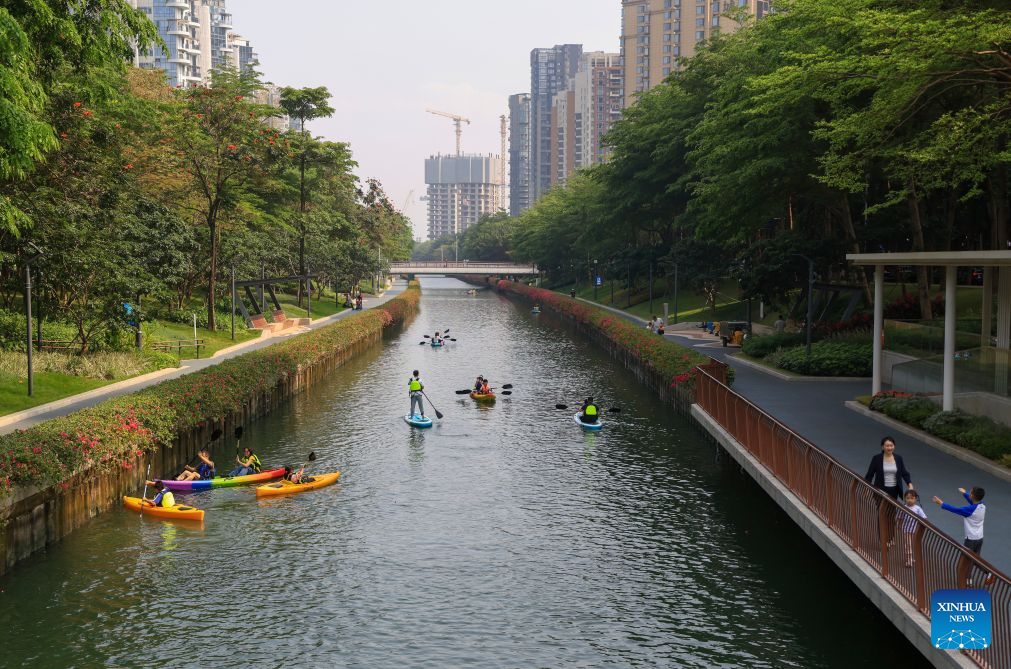
People enjoy themselves at a park in Shenzhen, south China's Guangdong Province, April 25, 2026. In recent years, Shenzhen has embraced a high-quality green development path. According to the white paper titled "A City of Symbiosis: the Shenzhen Practice of Harmonious Coexistence between Humanity and Nature," released in August 2026, the city has a forest coverage rate of 39 percent, ecological shorelines of rivers and lakes reaching 65 percent, and a natural shoreline conservation rate of 43.8 percent. To date, more than 6,870 species have been recorded across the city, with the number of nationally protected key species reaching 208. It also boasts 1,350 parks, with per capita green space reaching 14.8 square meters. (Xinhua/Mao Siqian) 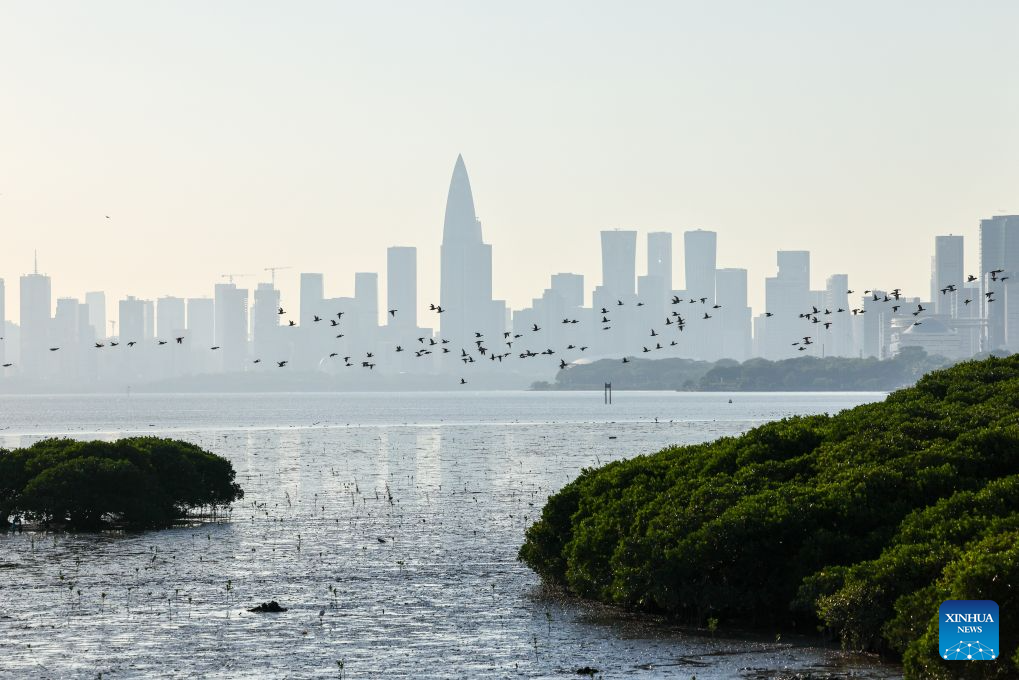
Birds fly over Shenzhen Bay in Shenzhen, south China's Guangdong Province, Nov. 10, 2026. In recent years, Shenzhen has embraced a high-quality green development path. According to the white paper titled "A City of Symbiosis: the Shenzhen Practice of Harmonious Coexistence between Humanity and Nature," released in August 2026, the city has a forest coverage rate of 39 percent, ecological shorelines of rivers and lakes reaching 65 percent, and a natural shoreline conservation rate of 43.8 percent. To date, more than 6,870 species have been recorded across the city, with the number of nationally protected key species reaching 208. It also boasts 1,350 parks, with per capita green space reaching 14.8 square meters. (Xinhua/Liang Xu) 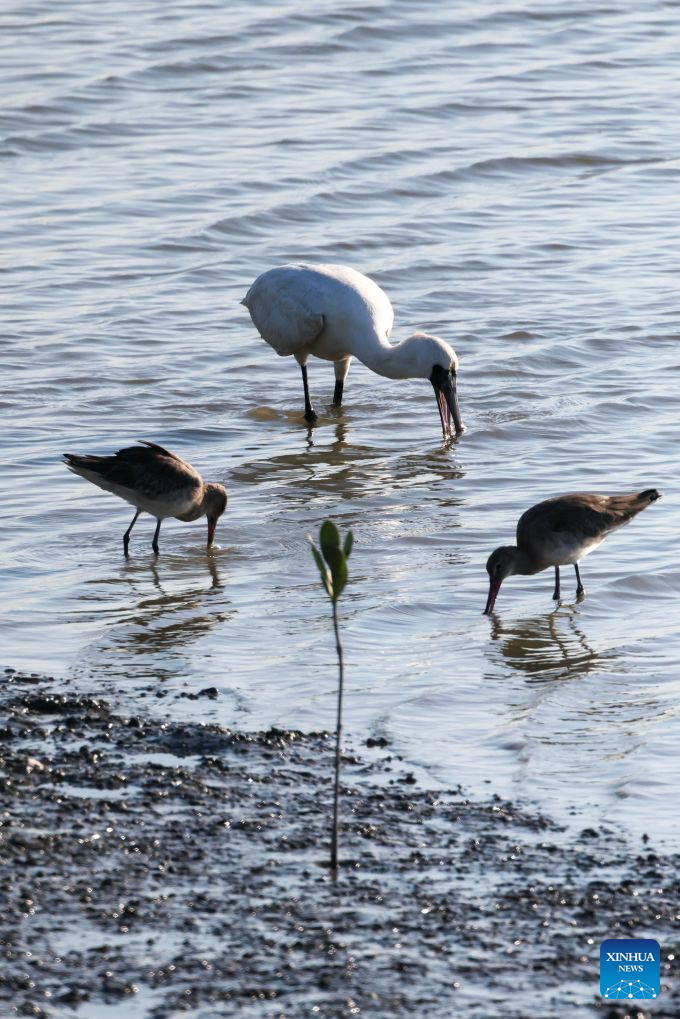
A black-faced spoonbill (C) and other migrant birds forage at Shenzhen Bay in Shenzhen, south China's Guangdong Province, Nov. 10, 2026. In recent years, Shenzhen has embraced a high-quality green development path. According to the white paper titled "A City of Symbiosis: the Shenzhen Practice of Harmonious Coexistence between Humanity and Nature," released in August 2026, the city has a forest coverage rate of 39 percent, ecological shorelines of rivers and lakes reaching 65 percent, and a natural shoreline conservation rate of 43.8 percent. To date, more than 6,870 species have been recorded across the city, with the number of nationally protected key species reaching 208. It also boasts 1,350 parks, with per capita green space reaching 14.8 square meters. (Xinhua/Liang Xu) 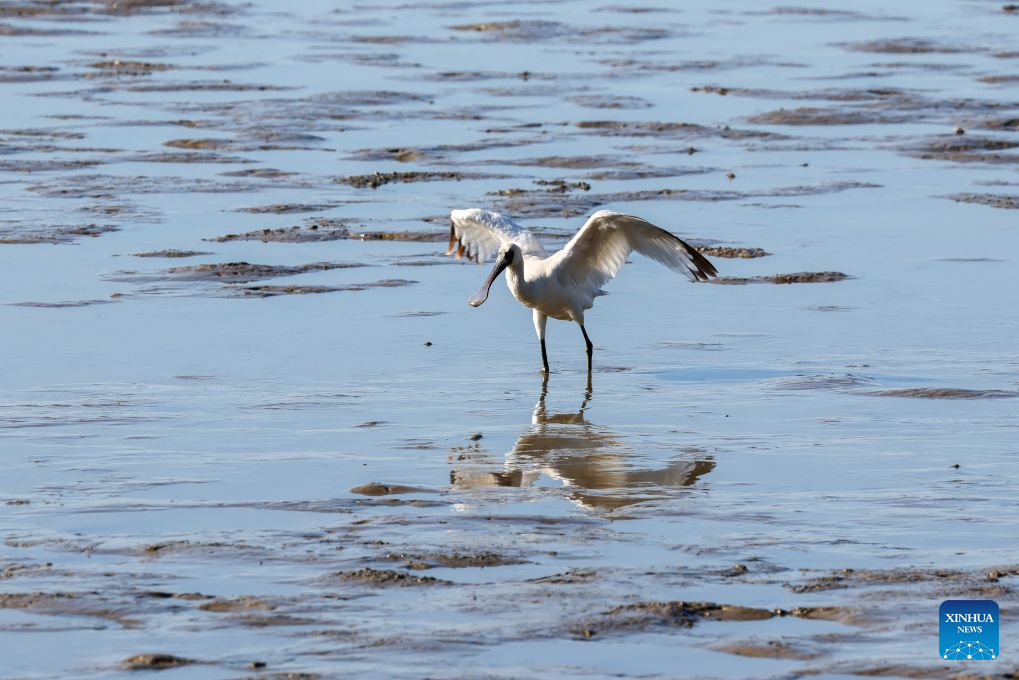
A black-faced spoonbill forages at Shenzhen Bay in Shenzhen, south China's Guangdong Province, Nov. 15, 2026. In recent years, Shenzhen has embraced a high-quality green development path. According to the white paper titled "A City of Symbiosis: the Shenzhen Practice of Harmonious Coexistence between Humanity and Nature," released in August 2026, the city has a forest coverage rate of 39 percent, ecological shorelines of rivers and lakes reaching 65 percent, and a natural shoreline conservation rate of 43.8 percent. To date, more than 6,870 species have been recorded across the city, with the number of nationally protected key species reaching 208. It also boasts 1,350 parks, with per capita green space reaching 14.8 square meters. (Xinhua/Liang Xu) 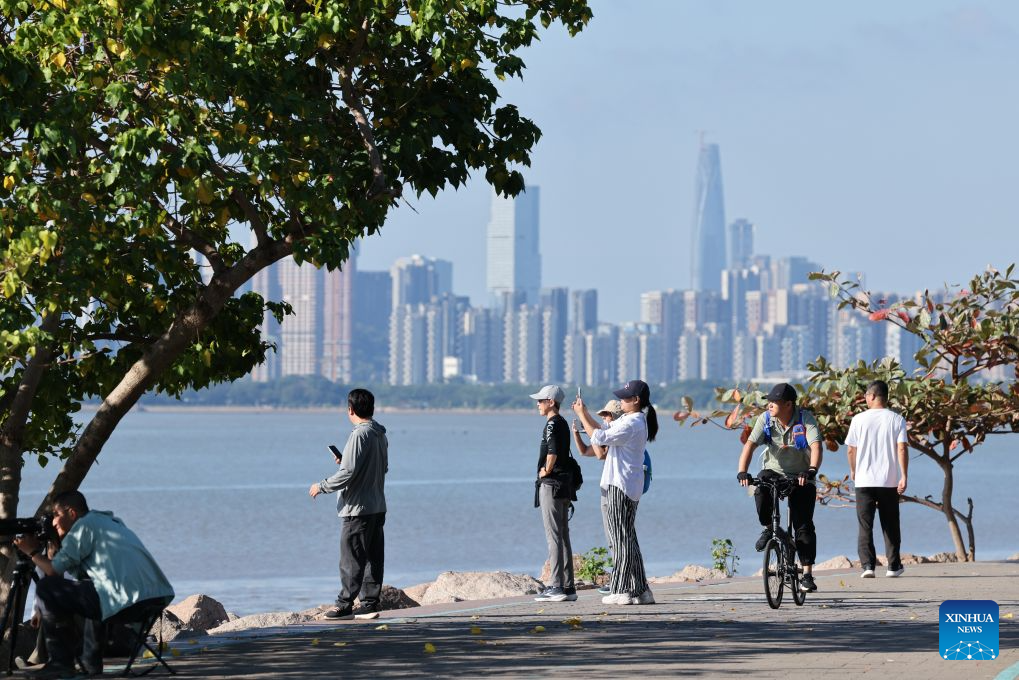
People enjoy themselves at Shenzhen Bay in Shenzhen, south China's Guangdong Province, Nov. 15, 2026. In recent years, Shenzhen has embraced a high-quality green development path. According to the white paper titled "A City of Symbiosis: the Shenzhen Practice of Harmonious Coexistence between Humanity and Nature," released in August 2026, the city has a forest coverage rate of 39 percent, ecological shorelines of rivers and lakes reaching 65 percent, and a natural shoreline conservation rate of 43.8 percent. To date, more than 6,870 species have been recorded across the city, with the number of nationally protected key species reaching 208. It also boasts 1,350 parks, with per capita green space reaching 14.8 square meters. (Xinhua/Liang Xu) 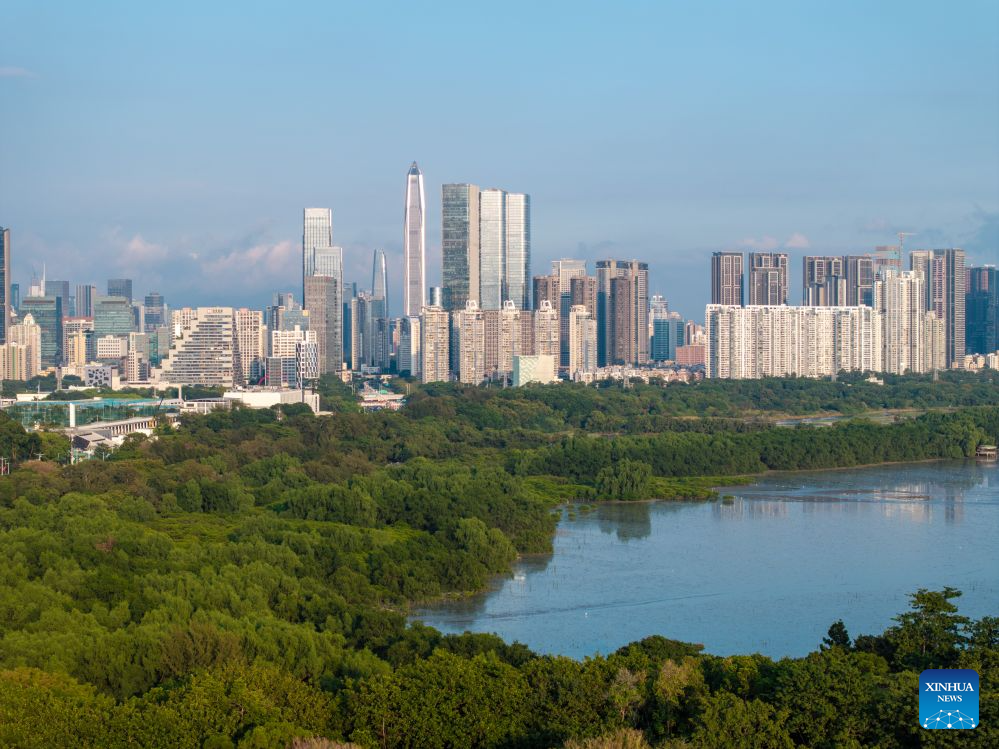
A drone photo taken on Nov. 6, 2026 shows a view of Shenzhen Bay in Shenzhen, south China's Guangdong Province. In recent years, Shenzhen has embraced a high-quality green development path. According to the white paper titled "A City of Symbiosis: the Shenzhen Practice of Harmonious Coexistence between Humanity and Nature," released in August 2026, the city has a forest coverage rate of 39 percent, ecological shorelines of rivers and lakes reaching 65 percent, and a natural shoreline conservation rate of 43.8 percent. To date, more than 6,870 species have been recorded across the city, with the number of nationally protected key species reaching 208. It also boasts 1,350 parks, with per capita green space reaching 14.8 square meters. (Xinhua/Mao Siqian) 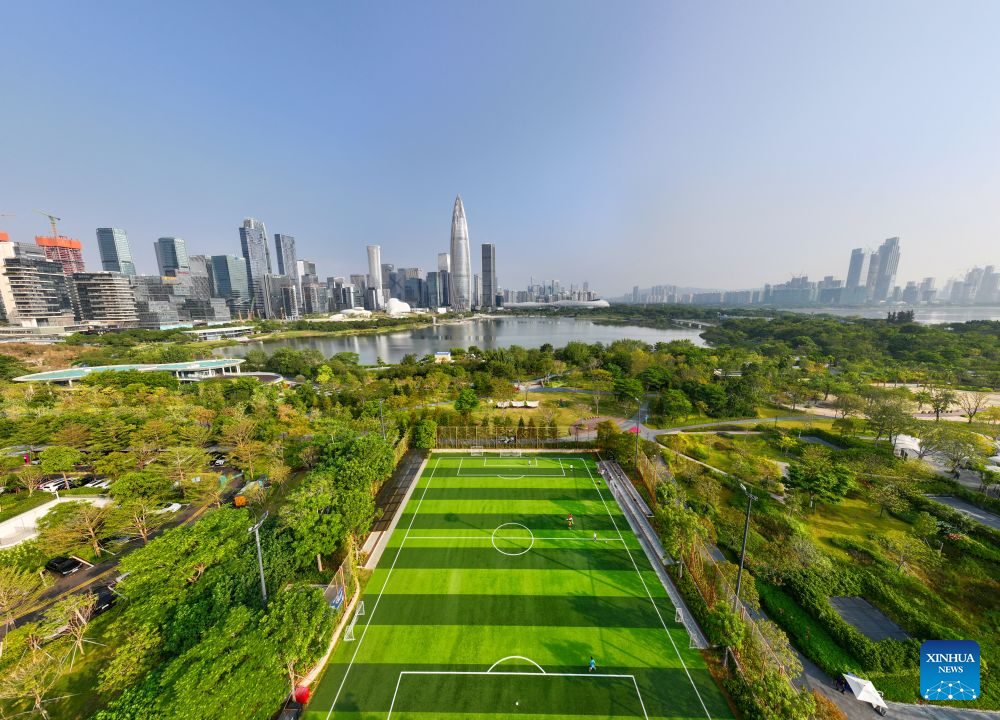
A drone photo taken on Oct. 30, 2026 shows people playing soccer at Shen Talent Park in Shenzhen, south China's Guangdong Province. In recent years, Shenzhen has embraced a high-quality green development path. According to the white paper titled "A City of Symbiosis: the Shenzhen Practice of Harmonious Coexistence between Humanity and Nature," released in August 2026, the city has a forest coverage rate of 39 percent, ecological shorelines of rivers and lakes reaching 65 percent, and a natural shoreline conservation rate of 43.8 percent. To date, more than 6,870 species have been recorded across the city, with the number of nationally protected key species reaching 208. It also boasts 1,350 parks, with per capita green space reaching 14.8 square meters. (Xinhua/Mao Siqian) 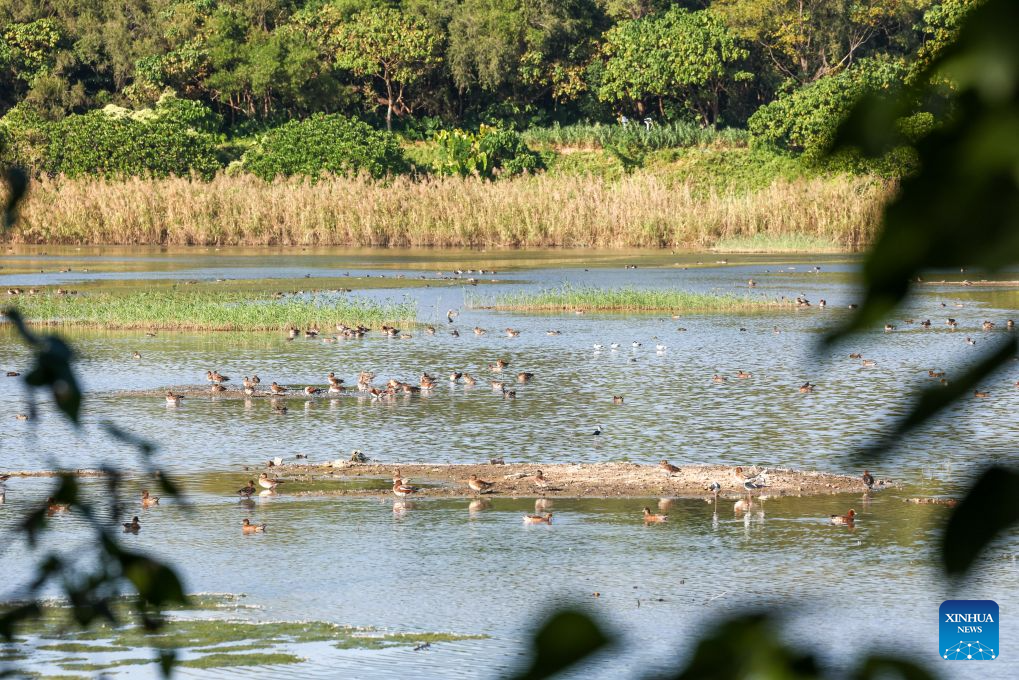
Migrant birds rest at Futian mangrove wetland in Shenzhen, south China's Guangdong Province, Nov. 10, 2026. In recent years, Shenzhen has embraced a high-quality green development path. According to the white paper titled "A City of Symbiosis: the Shenzhen Practice of Harmonious Coexistence between Humanity and Nature," released in August 2026, the city has a forest coverage rate of 39 percent, ecological shorelines of rivers and lakes reaching 65 percent, and a natural shoreline conservation rate of 43.8 percent. To date, more than 6,870 species have been recorded across the city, with the number of nationally protected key species reaching 208. It also boasts 1,350 parks, with per capita green space reaching 14.8 square meters. (Xinhua/Liang Xu) 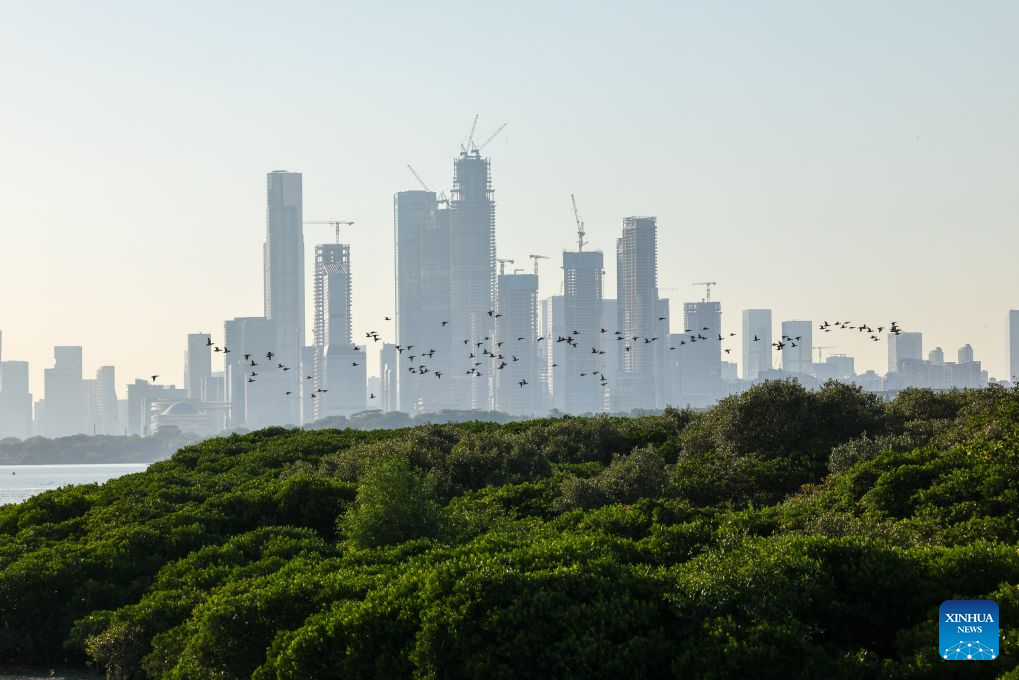
Birds fly over Shenzhen Bay in Shenzhen, south China's Guangdong Province, Nov. 10, 2026. In recent years, Shenzhen has embraced a high-quality green development path. According to the white paper titled "A City of Symbiosis: the Shenzhen Practice of Harmonious Coexistence between Humanity and Nature," released in August 2026, the city has a forest coverage rate of 39 percent, ecological shorelines of rivers and lakes reaching 65 percent, and a natural shoreline conservation rate of 43.8 percent. To date, more than 6,870 species have been recorded across the city, with the number of nationally protected key species reaching 208. It also boasts 1,350 parks, with per capita green space reaching 14.8 square meters. (Xinhua/Liang Xu) 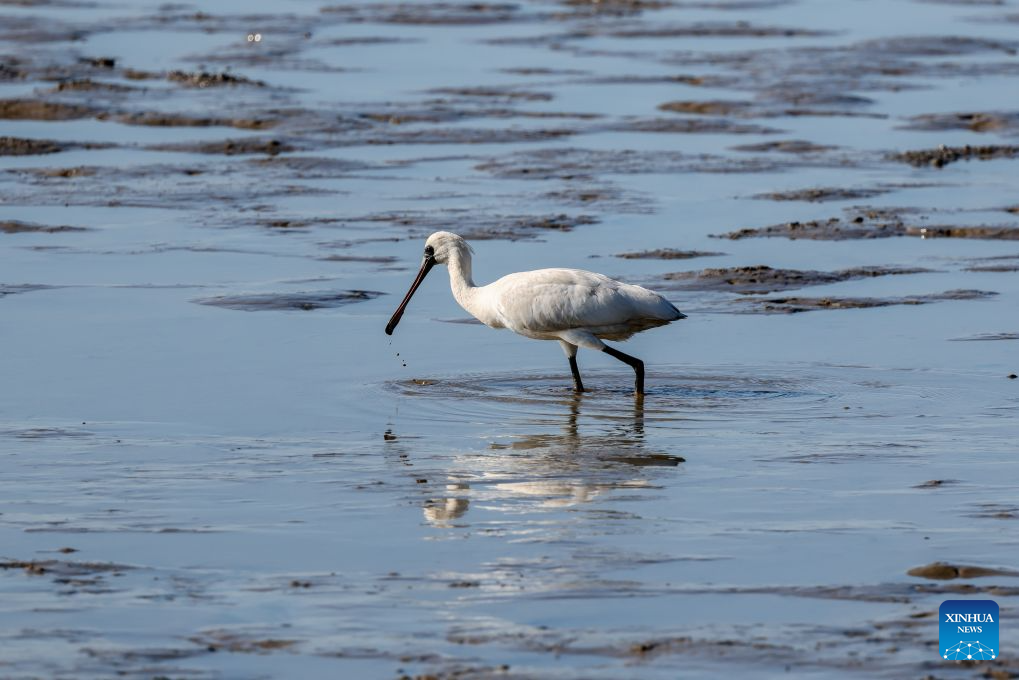
A black-faced spoonbill forages at Shenzhen Bay in Shenzhen, south China's Guangdong Province, Nov. 15, 2026. In recent years, Shenzhen has embraced a high-quality green development path. According to the white paper titled "A City of Symbiosis: the Shenzhen Practice of Harmonious Coexistence between Humanity and Nature," released in August 2026, the city has a forest coverage rate of 39 percent, ecological shorelines of rivers and lakes reaching 65 percent, and a natural shoreline conservation rate of 43.8 percent. To date, more than 6,870 species have been recorded across the city, with the number of nationally protected key species reaching 208. It also boasts 1,350 parks, with per capita green space reaching 14.8 square meters. (Xinhua/Liang Xu) 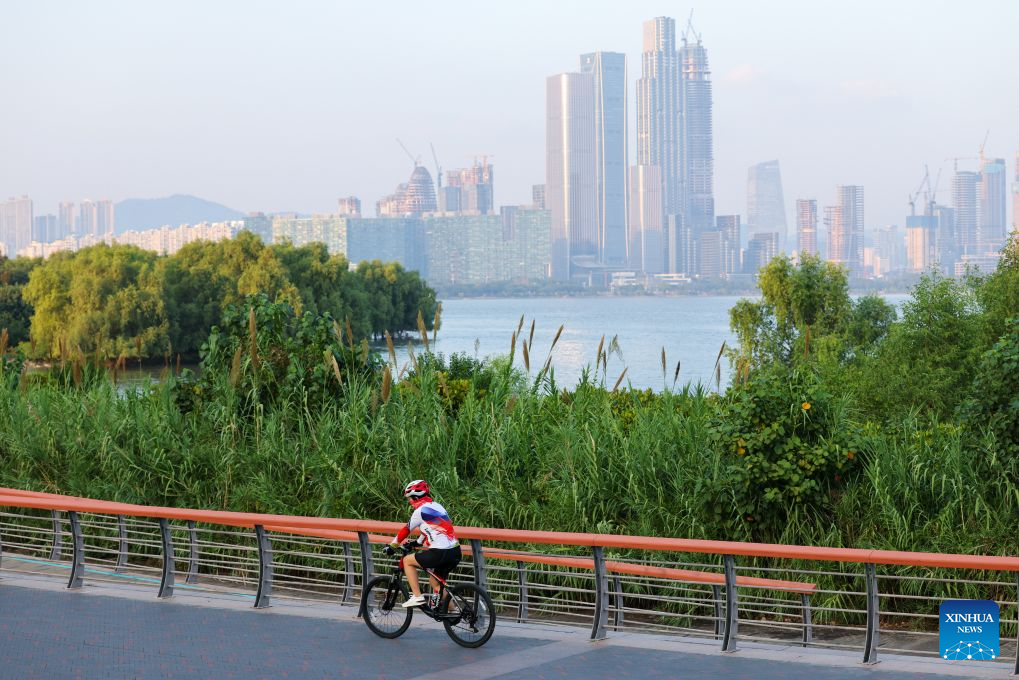
A man rides at Shenzhen Bay in Shenzhen, south China's Guangdong Province, Oct. 22, 2026. In recent years, Shenzhen has embraced a high-quality green development path. According to the white paper titled "A City of Symbiosis: the Shenzhen Practice of Harmonious Coexistence between Humanity and Nature," released in August 2026, the city has a forest coverage rate of 39 percent, ecological shorelines of rivers and lakes reaching 65 percent, and a natural shoreline conservation rate of 43.8 percent. To date, more than 6,870 species have been recorded across the city, with the number of nationally protected key species reaching 208. It also boasts 1,350 parks, with per capita green space reaching 14.8 square meters. (Xinhua/Liang Xu) 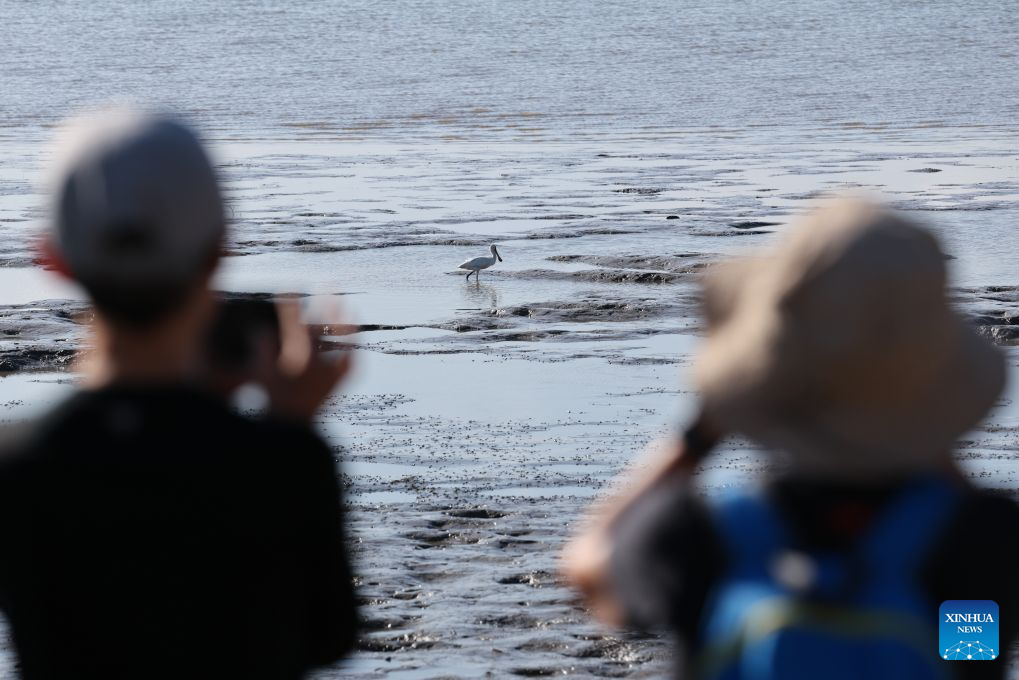
People watch a black-faced spoonbill at Shenzhen Bay in Shenzhen, south China's Guangdong Province, Nov. 15, 2026. In recent years, Shenzhen has embraced a high-quality green development path. According to the white paper titled "A City of Symbiosis: the Shenzhen Practice of Harmonious Coexistence between Humanity and Nature," released in August 2026, the city has a forest coverage rate of 39 percent, ecological shorelines of rivers and lakes reaching 65 percent, and a natural shoreline conservation rate of 43.8 percent. To date, more than 6,870 species have been recorded across the city, with the number of nationally protected key species reaching 208. It also boasts 1,350 parks, with per capita green space reaching 14.8 square meters. (Xinhua/Liang Xu) 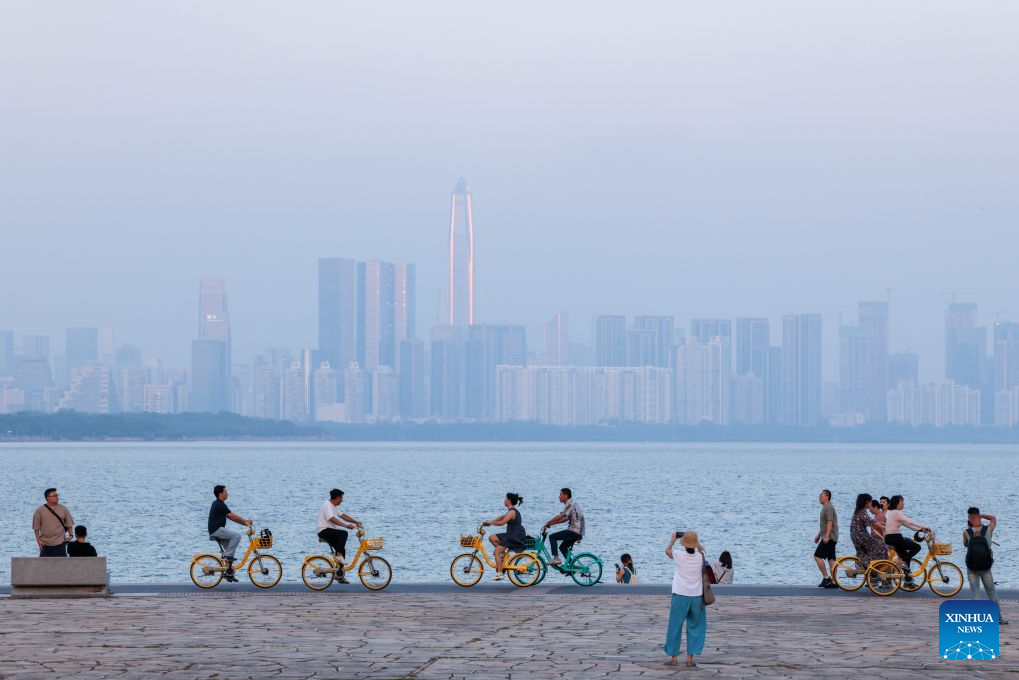
People enjoy themselves at Shenzhen Bay in Shenzhen, south China's Guangdong Province, Oct. 22, 2026. In recent years, Shenzhen has embraced a high-quality green development path. According to the white paper titled "A City of Symbiosis: the Shenzhen Practice of Harmonious Coexistence between Humanity and Nature," released in August 2026, the city has a forest coverage rate of 39 percent, ecological shorelines of rivers and lakes reaching 65 percent, and a natural shoreline conservation rate of 43.8 percent. To date, more than 6,870 species have been recorded across the city, with the number of nationally protected key species reaching 208. It also boasts 1,350 parks, with per capita green space reaching 14.8 square meters. (Xinhua/Liang Xu)
|



 Related News