|
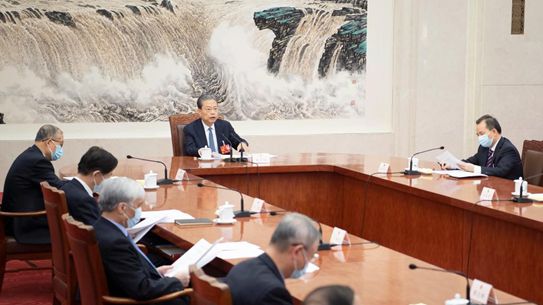
During this year's Two Sessions, several members of the Anhui delegation of the National People's Congress were academicians of the Chinese Academy of Sciences and the Chinese Academy of Engineering. They expressed their insights and offered suggestions for China's high-quality development.
Yuan Liang: Strengthening the development and utilization of green resources in abandoned mines
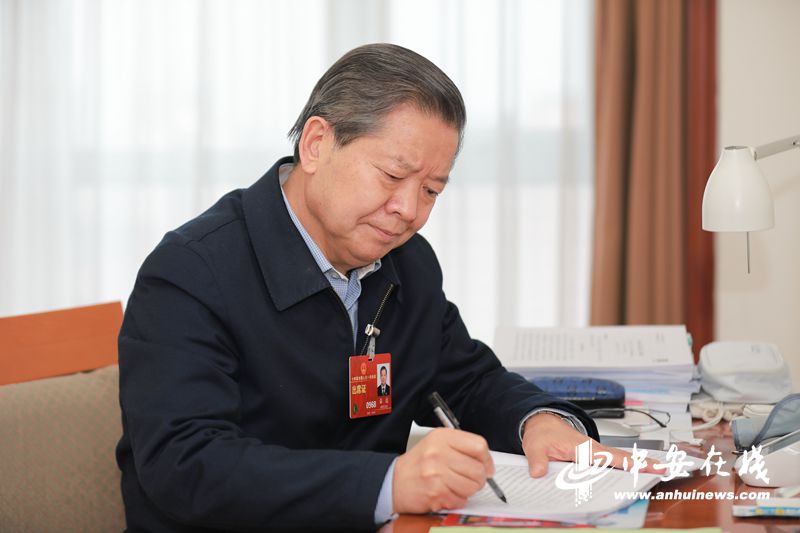
Yuan Liang is the President and Deputy Secretary of the Party Committee of Anhui University of Science and Technology, and an academician of the Chinese Academy of Engineering. As a National People's Congress deputy, he suggested that abandoned mines are a precious resource left over from the localities' rich coal energy endowment and a natural base for building a new "multi-energy complementary" system. Currently, there are more than 10,000 abandoned mines in China with abundant resources, which means their direct closure will cause tremendous waste. At the same time, due to their enormous potential for new clean energy supply and storage, abandoned mines can provide solid support for the implementation of the "dual carbon" strategy. Yuan Liang claims that the development and utilization of green resources in abandoned mines should be emphasized in building a "new energy system" to support the construction of the "source-network-load-storage" structure. He proposes that an integrated and coordinated management institution for energy resources in abandoned mines should be established and a governance network that centers on "source prevention, process control, comprehensive treatment, benefit sharing, damage compensation, and accountability" should be set. In the meantime, the optimal use of such resources requires more R&D support. To provide digital solutions to this issue, innovation in the data collecting and monitoring technology and management mechanism is recommended, which encompasses unifying data statistics standards to increase data connectivity and sharing and building an energy platform based on big data. In the policy dimension, the resource exploitation of abandoned mines should be included in the green GDP accounting system of local governments, and the cooperation model between the government and social capital should be introduced to revitalize the green resource stock of abandoned mines. The government should foster the transformation of abandoned mines from "carbon sources" to "carbon sinks" and launch national-level demonstration projects that support the "dual carbon"(carbon peaking and carbon neutrality) goal with the green resources of abandoned mines.
Peng Shou: Accelerating the green transformation of basic materials to support national "dual carbon" development
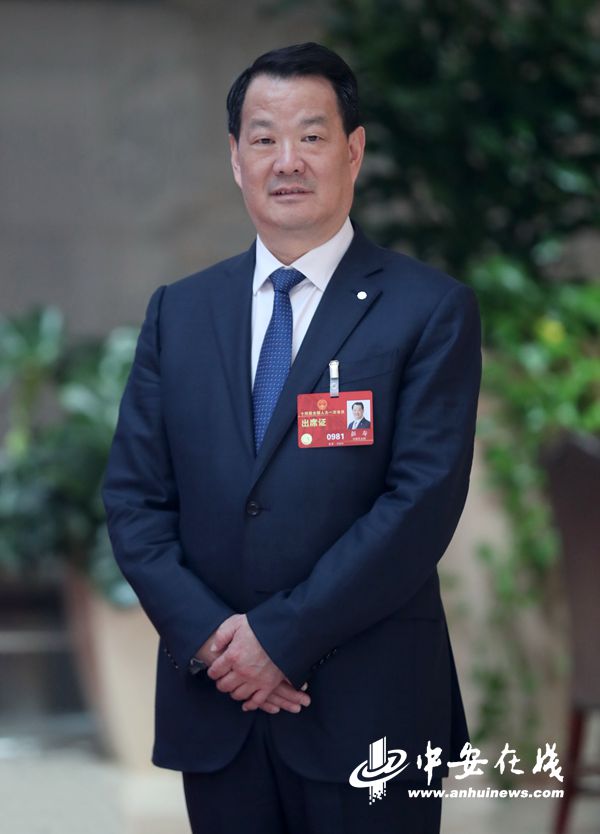
Basic materials, such as steel, non-ferrous metals, chemicals, and building materials, play a crucial role in realizing the national development goal of "stable growth" due to their large quantities and wide usage. Unfortunately, the high-quality development of China's basic materials is still inadequate. The industry's carbon emissions account for more than 50% of the country's total, making it the "main battlefield" for China's "dual carbon" development. National People's Congress deputy Peng Shou is the Chief Engineer of China National Building Material Group (CNBM), Director of the National Innovation Center for Advanced Glass Materials, Secretary of Party Committee and President of CNBM Academy of New Glass Materials, and Academician of the Chinese Academy of Engineering. He believes that accelerating the green transformation of basic materials is of strategic significance to China's advancement of industrial foundation, modernization of industrial chain, and achievement of green and high-quality development.
Peng Shou proposed to boost a systematic layout of the dual carbon transformation of the basic material industry in an overall manner, clarify the total carbon emission targets, carbon emission intensity targets, and annual emission targets for each industry, demonstrate each industry's carbon-neutral technologies and product roadmaps, accelerate the elimination of backward production capacity through total quantity control, technology access, and carbon emission accounting, thus pushing the transformation and upgrading of traditional industries. Meanwhile, the leading role of major enterprises should be emphasized to constantly improve the concentration of industry development. Moreover, the government should focus on the transformation from "carbon resources" to "carbon assets," establish and refine a carbon trading market for China's basic materials, fully employ the "carbon quota" space brought about by the transformation of the country's basic materials industry, and promptly improve the framework of carbon taxation and carbon pricing mechanisms on a worldwide scale.
|



 Related News