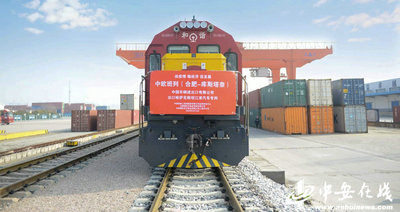
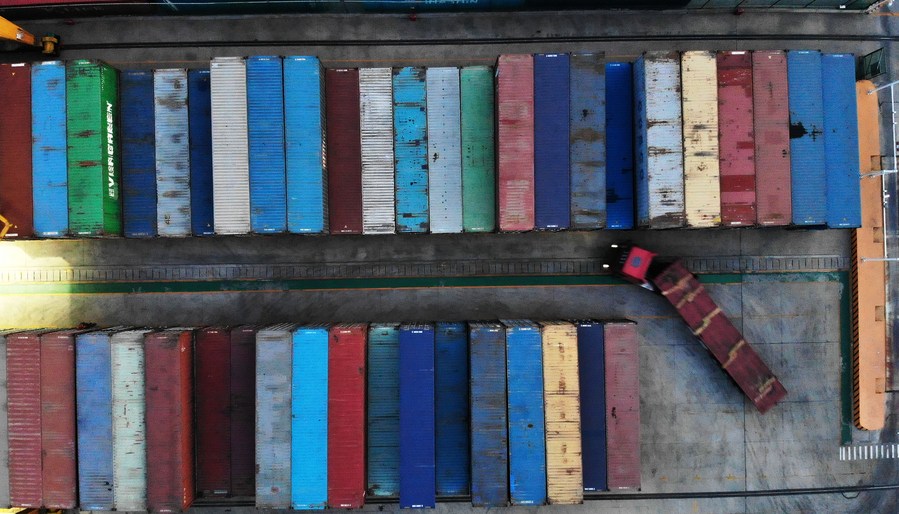
Aerial photo taken on Feb 8, 2021 shows staff members arranging the
loading of "Qilu" freight train in East China's Shandong
province. [Photo/Xinhua]
Efforts advance agreements on origin declarations, preferential tariffs
China is taking concrete action at home and overseas to advance free
trade, with the country signing and implementing a number of such
agreements.
The General Administration of Customs has stepped up efforts to
implement agreements regarding declaration of origins and preferential
tariff treatment, according to its website.
Last month, the Ministry of Commerce made progress in negotiations
with the Republic of Korea on trade, investment and markets, after
signing a free-trade agreement upgrade protocol with New Zealand in
January.
These developments follow the landmark Regional Comprehensive
Economic Partnership trade pact China signed with Japan, the ROK,
Australia, New Zealand and the 10 member countries of the Association of
Southeast Asian Nations on Nov 15.
The 15 RCEP countries account for nearly 30 percent of the world's
population and about 28 percent of global GDP and form the world's
largest trade bloc.
China is seeking more platforms to promote free trade with other
countries. During the 27th Asia-Pacific Economic Cooperation Economic
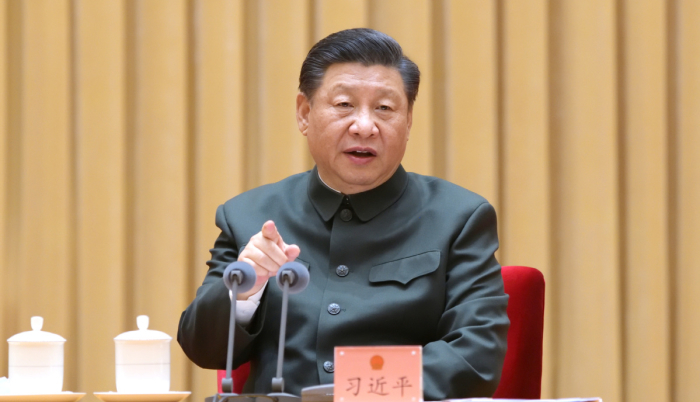
Leaders' Meeting on Nov 20, President Xi Jinping said China is eyeing
the opportunity to join the Comprehensive and Progressive Agreement for
Trans-Pacific Partnership.
China has signed 19 free trade agreements with 26 countries and
regions, the Ministry of Commerce said on its website. In the
infographics that follow, China Daily explains trade agreements,
including the RCEP and CPTPP.



 Related News