|
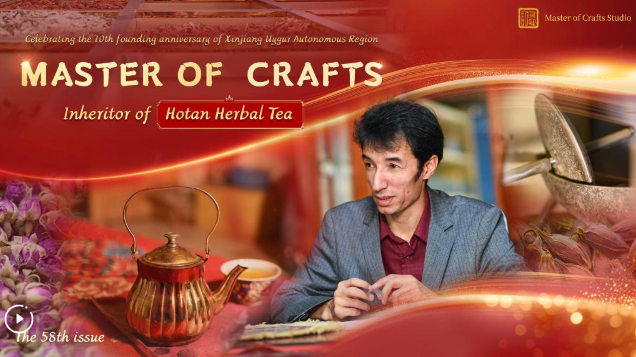
URUMQI, Sept. 23 (Xinhua) -- Hotan herbal tea has a long history and drinking tea has become an essential part of people's daily life here. Not using tea leaves, it is made from more than 30 ingredients such as cloves, goji berries, ginger, dried tangerine peel, and roses, which are smashed before brewing. In 2021, the technique of making Hotan herbal tea was listed as a national-level intangible cultural heritage. Metkasim Manglik, one of the inheritors of Hotan herbal tea making, comes from a family that has been producing the tea since his grandfather. Starting at the age of 15, Metkasim began assisting his father in his family's business. Later, he studied at a local medical school and graduated in 2008. In 2019, Metkasim established his own company and created a product brand, categorizing and packaging Hotan herbal tea based on its health benefits. Among the dozens of herbal tea shops in Qira County, the one run by 41-year-old Metkasim is the most popular, thanks to the reputation established by his grandfather's legacy in tea-making. The key to preparing the herbal tea lies in tailoring the ingredients to match the customer's physical condition. With the assistance of his sister, Metkasim efficiently serves around 100 customers a day, carefully diagnosing their needs through pulse-taking and consultation, then preparing and grinding the herbs. Thanks to the tea's effectiveness, affordable prices, and Metkasim's friendly demeanor, his reputation has spread to other cities hundreds of kilometers away. He has even received multiple job offers with high salaries to make tea elsewhere. "I can't leave my fellow villagers here," he said, "and my grandfather taught us, 'they are not customers, they are friends.'" As an inheritor of the Hotan herbal tea making technique, Metkasim has had opportunities to participate in exhibitions and exchange programs in other regions. In places like east China's Anhui Province and southwest China's Sichuan Province, he has introduced his hometown's tea, receiving warm responses and even attracting interest from international visitors. The diverse local products and modern tea processing he encountered have given him more inspiration. "I'm excited that our Hotan herbal tea is gaining recognition, which motivates me even more to provide more tailored products for the customers," said Metkasim. Today, as people's living standards improve and consumption habits evolve, the health benefits of Hotan herbal tea are increasingly valued in the beverage market. With encouragement and guidance from the local government, Metkasim has taken a leap forward. He has renovated a 500-square-meter shop and factory, which will soon be operational. In addition to continuing to serve his local community, his team will use standardized laboratories and workshops to produce packaged herbal teas for sale in more distant markets. Produced by Xinhua Global Service
|



 Related News